
Loading...
Serving Southaven, MS and surrounding areas. (662) 390-0020
Serving Southaven, MS and surrounding areas. (662) 390-0020
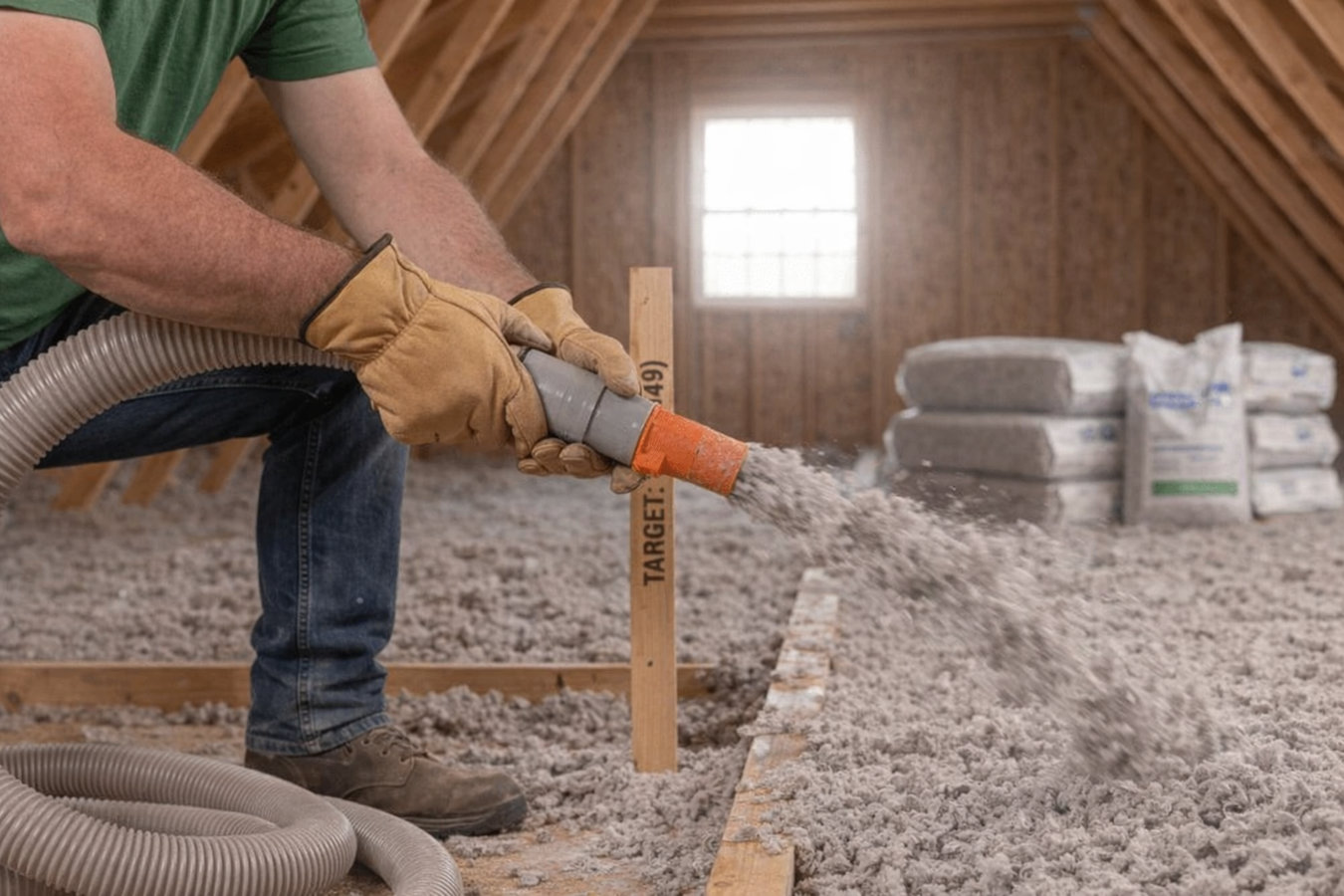
Most Southaven attics have insulation - just not enough. Blown-in material fills the gaps and corners rigid batts leave behind, bringing your home up to the depth this climate actually demands.
Blown-in insulation in Southaven, MS is loose fiberglass or cellulose material a contractor blows into your attic using a large hose and machine - most single-story homes are completed in two to four hours. Unlike rigid batts, blown-in material fills every corner, joist bay, and odd-shaped space, making it the most effective way to bring an older attic up to the depth this climate requires.
Many Southaven homes built in the 1980s and 1990s have some insulation in the attic - but not nearly enough. The Department of Energy recommends significantly more depth for this climate zone than was required at the time those homes were built. If you can see the tops of the ceiling joists when you peek into your attic hatch, you are likely losing a meaningful amount of energy every day. Pairing a blown-in top-up with a full home insulation assessment is often the fastest way to find every area where your home is falling short.
This page covers the warning signs your attic needs attention, what the process looks like, and how to make sure the job is done right.
In Southaven's climate, a well-insulated attic acts as a buffer between the scorching roof and your living space. If you walk upstairs on a July afternoon and it feels like a different house, your attic is likely too thin to do its job. This is one of the most common complaints from homeowners in DeSoto County subdivisions built in the 1990s.
Entergy Mississippi customers in Southaven often see summer electric bills spike when their HVAC system has to work overtime against heat coming through a poorly insulated ceiling. If your bill has crept up year over year and your system seems to run constantly, the attic is the first place to look.
Healthy attic insulation should be deep enough that you cannot easily see the wooden framing underneath it. If you peek into your attic hatch and the joists are visible, or the insulation looks compressed and shallow, you almost certainly need more. This is something you can check yourself in about two minutes with a flashlight.
Gaps around light fixtures, attic hatches, and plumbing penetrations let conditioned air escape and hot air sneak in. If certain rooms feel drafty or stuffy regardless of what your thermostat says, air leakage through the ceiling is often the cause - and blown-in insulation combined with air sealing is the fix.
Every blown-in job starts with an air-sealing step - closing up gaps around light fixtures, plumbing penetrations, and other openings before any material goes in. Skipping that step is the most common reason homeowners do not see the savings they expected. We then blow in fiberglass or cellulose to the depth required for this climate, checking measurements in multiple spots before calling the job done. Most Southaven attic top-ups work well alongside our attic insulation service, which covers additional attic options including batt and spray foam approaches for homes that need a more comprehensive solution.
For homes that have never had insulation work done, we often combine blown-in attic work with a broader review of the crawl space, walls, and rim joists. This pairs naturally with our full home insulation service, where we assess every part of the building envelope before recommending which areas will give you the biggest return. Every recommendation starts with a walkthrough of your specific home.
Adding blown-in material over existing insulation that is too shallow - the most common job in Southaven homes built before 2000.
Learn moreAir sealing all penetrations first, then blowing insulation to the correct depth - the right approach for homes that have never had proper air sealing done.
Learn moreA full review of attic, crawl space, and walls before any work begins - suited to homeowners who want to understand every area of loss before committing to a scope.
Learn moreBlown-in, batt, and spray foam options compared for your specific attic - we recommend the right material for your situation, not just the cheapest option.
Learn moreSouthaven sits in DeSoto County where summer temperatures regularly push above 95 degrees and attic temperatures can climb well above 130 degrees on a hot afternoon. That heat radiates straight down into your living space if your insulation is thin or old. The city grew rapidly as a Memphis suburb during the 1980s and 1990s, and building codes at the time required far less insulation than what is recommended today. If your home was built before 2000 and has never had insulation added, there is a good chance your attic has three to four inches when it should have twelve to fifteen. That gap costs you money every month on your electric bill. The U.S. Department of Energy recommends R-49 to R-60 for attics in this climate zone - a level most older Southaven homes fall well short of.
Mississippi's humidity is the other factor that shapes how this work gets done here. Southaven averages around 55 inches of rain per year, and summer humidity is consistently high. A good contractor will check for moisture issues before installing and make sure your attic has proper ventilation so moisture does not build up after the job. We serve homeowners across Southaven and neighboring Horn Lake and understand the specific conditions - soil, moisture patterns, and housing stock - that shape every job in this area. Entergy Mississippi has also offered rebates for insulation upgrades to residential customers in this service territory - ask us whether a current rebate applies to your project.
Call or send a request and we ask a few basics - your home's square footage, when it was built, and any comfort problems you have noticed. We respond within 1 business day to confirm your estimate appointment and come prepared with the right equipment.
A crew member goes into your attic, measures what is already there, checks for moisture or mold, and identifies any gaps that need to be sealed first. This visit typically takes 20 to 30 minutes and is free. You leave with a written quote that breaks down air sealing, materials, and labor separately.
The crew seals penetrations around light fixtures and plumbing first, then blows insulation in layers to the right depth. Most Southaven homes take two to four hours. The blowing machine stays outside or in the garage - your living space is not disrupted.
Before packing up, we verify the depth in multiple spots and walk you through the finished work. We provide the paperwork you will need for any federal tax credit or Entergy Mississippi rebate claim - ask for it before we leave.
We will measure what is in your attic, tell you exactly what it needs, and give you a clear written price - no pressure, no obligation. Call us or fill out the form and we will follow up within 1 business day.
(662) 390-0020Every job starts with a free written estimate and a clear scope of work. Our experienced local crews document the material and depth installed on each job, so you can see exactly what you paid for before we leave. That record is worth having long after the work is done.
The 1990s subdivisions near Goodman Road, the crawl-space-heavy homes on older streets, the moisture patterns specific to this part of DeSoto County - this is the context for every recommendation we make. Local experience matters when it comes to attic work.
Every blown-in job we do starts with sealing gaps around light fixtures, plumbing penetrations, and attic hatches before any material goes in. This is what separates a job that delivers real savings from one that looks complete but still leaks. We do not skip this step.
We measure the insulation depth in multiple spots after installation - not just one. The North American Insulation Manufacturers Association recommends depth checks across the full attic floor, not spot checks at the hatch. You can see the measurements yourself before we leave.
When the job is done, you should be able to see the depth, read the numbers, and understand exactly what was installed. That transparency is how we build trust with every homeowner we work with in Southaven.
For independent guidance on insulation depth and installation standards, the U.S. Department of Energy insulation guide and the North American Insulation Manufacturers Association are reliable starting points.
A whole-home look at attic, crawl space, and walls - the right starting point when you want to understand every area before deciding where to invest.
Learn moreAttic-specific options including blown-in, batt, and spray foam - we compare materials and recommend the right fit for your attic structure and budget.
Learn moreEvery month with too-thin attic insulation is a month of higher electric bills. Call now or send a message - we follow up within 1 business day.